
Best Trimmer Brands in India
Let's be honest. Walk into any online marketplace and you'll find hundreds of trimmer options. Each promises precision. Each claims durability. Most deliver disappointment. The problem isn't that good trimmers don't exist. It's that most people don't know what actually matters when choosing one.
Scroll through Reddit threads and you'll see the same pattern. Someone buys a trendy brand. It vibrates after six months. Their Philips trimmer from five years ago still works fine. This happens because people optimize for the wrong features. They chase price, not value. They ignore battery life, then complain about constant charging. They pick based on marketing, not real-world performance.
Today's trimmer market has shifted. The wave of D2C grooming brands entering India has changed the game entirely. Brands like Beardo, Bombay Shaving Company, and LetsShave aren't just selling trimmers. They're solving specific problems that traditional brands ignored. Better battery life. Smarter ergonomic design. Features built around how Indian men actually groom. Prices that don't require choosing between quality and affordability.
The key insight? A great trimmer isn't about the brand name on the box. It's about matching the right tool to your specific needs. Battery life matters more if you travel. Blade precision matters more if you have thick facial hair. Multi-functionality matters if you want one device for everything. Understanding these trade-offs saves you money and frustration.

 Followers
Lifelong
Lifelong Online, India's leading D2C brand, offers innovative solutions across health, fitness, and home essentials, with a commitment to quality and customer-centric design, serving over 5 million households.
 Followers
Beardo India
Beardo offers a comprehensive grooming range for men, featuring over 300 products including beard, hair, skin care, fragrances, and accessories, tailored for raw, real, unfiltered masculinity.
 Followers
VEGA
Vega is a leading Indian beauty accessories brand, specializing in innovative grooming tools, including hair brushes, combs, and styling appliances for men and women, empowering confidence and ease in self-care.
 Followers
Ustraa
Ustraa is a men's grooming brand offering high-quality products free from harmful chemicals, formulated in-house. Established in 2015, it helps men look good, smell great, and embrace their swagger.
 Followers
Bombay Shaving Company
Bombay Shaving Company is a premium men's grooming brand focused on high-quality, painless grooming solutions, providing a luxurious experience that empowers modern men with customizable and effective products.
 Followers
Pee Safe
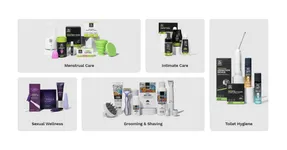
Pee Safe, a leading feminine hygiene brand in India, offers a wide range of products including toilet hygiene, menstrual care, and intimate wellness solutions, ensuring safety and comfort for women.
 Followers
Alan Truman
The brand offers no-frills, high-quality styling tools and accessories, enabling customers to achieve salon-like results conveniently at home.
 Followers
VGR OFFICIAL
VGR is a reputable personal grooming brand in India, known for high-quality grooming tools, innovative designs, and a commitment to customer satisfaction, offering a one-year warranty on products.
What's Changed in the Trimmer Market
Five years ago, trimmer selection in India was simple. Buy Philips or Braun. Pay premium prices. Accept limited options. That's no longer true. The D2C revolution has democratized trimmer technology. Brands are competing on features that actually matter. Battery capacity. Blade sharpness. Charging speed. Value for money.
The most important shift? Brands now design specifically for Indian needs. Beard types vary. Grooming routines differ. Climate affects battery performance. D2C brands test with real users, iterate based on feedback, and skip the retail middleman markup. This is why a ₹1,500 trimmer today often outperforms a ₹3,000 trimmer from three years ago.
Battery technology is the clearest example. Older models offered 45-60 minutes runtime. Modern trimmers hit 90-120 minutes easily. Some, like Bombay Shaving Company's Legend 365, deliver 300 minutes on a single charge. That's not marketing fluff. That's engineering that respects your time. Fast charging (complete charge in 1-2 hours) combined with longer runtime means you're never without your trimmer when you need it.
Blade innovation follows the same pattern. Stainless steel is standard now. Self-sharpening technology is common. But here's what's new: precision has reached new levels. Ceramic blades. Titanium coatings. Dual-blade designs that reduce tugging. These aren't premium extras anymore. Budget brands include them. The race is pushing everyone to innovate.
Battery Life: Why It Matters More Than Price
Here's a hard truth. A ₹1,200 trimmer with 60-minute runtime is more valuable than a ₹2,000 trimmer with 45-minute runtime. Yet most people pick wrong because they don't think about actual usage.
Calculate this: if you groom every other day and need 5-10 minutes per session, 60 minutes of runtime means you charge once every 6-12 days. If you travel or groom multiple people, 90+ minutes cuts charging stress dramatically. Brands like Philips and Havells deliver 80+ minute runtime even in budget ranges. Some newer D2C options hit 120 minutes for similar pricing.
Charging speed matters equally. USB-C charging (now standard in mid-range and premium trimmers) combines with smart charging technology to deliver full charge in 1-2 hours. Compare this to older models needing 8 hours. A 5-10 minute quick charge for emergency grooming? That's a feature that changes your morning.
Here's the catch: high runtime doesn't mean poor design. Modern lithium-ion batteries are lightweight. Motor efficiency is better. Newer trimmers feel better in hand because engineers optimized power delivery, not bulk. This matters if you groom for 30 minutes straight or have mobility concerns.
Blade Quality: The One Thing You Can't Compromise On
Dull blades ruin everything. They snag hair instead of cutting. They cause skin irritation. They're painful to use. Yet many people ignore blade quality until they've already bought the trimmer. That's backwards.
Look for stainless steel or ceramic blades. Both stay sharp longer than older alternatives. Self-sharpening technology, now common across price points, maintains edge without manual intervention. Some premium options use titanium coatings that reduce friction and heat during cutting. This matters for sensitive skin and dense beards.
Replaceable blade sets are underrated. Some trimmers lock you into one blade type for life. Better options (Philips OneBlade, certain Braun models) let you swap blades. This extends trimmer life and keeps performance sharp. Over 3-4 years, you might buy one replacement set instead of a new trimmer.
Rounded blade tips prevent accidental nicks. Dual-blade designs cut closer without tugging. These design details separate ₹1,500 options that feel like luxury from ₹4,000 options that feel mediocre. Brands matter less here than specifications. Read what the trimmer actually has, not what marketing claims.
Multi-Functionality: One Device or Multiple Tools?
The market has split into two camps. Specialists: trimmers designed for one job (usually beards) with laser focus on that task. All-in-one: devices handling beard, body, nose, ear grooming in one package.
Specialists are better if you only trim beards and want the sharpest, most precise experience. All-in-one devices are better if you groom multiple areas or travel frequently and want to pack light. Neither is objectively better. Your needs decide.
D2C brands are winning the all-in-one category. Bombay Shaving Company, Menhood, and Beardo offer multipurpose trimmers with precision attachments at reasonable prices. These appeal to young men who want simplicity. Traditional brands like Philips and Braun still dominate specialist categories because they've perfected single-purpose design.
The new trend: modular design. Buy a base trimmer, add specialized heads as needed. This gives you flexibility without forced features you won't use. Some brands are moving here, though most still bundle everything together.
Affordability Without Compromise: What's Really Possible
The best budget trimmers today are genuinely good. Not just "good for the price." Actually good. Havells, Syska, Bombay Shaving Company, and VGR offer ₹800-₹1,500 options with features that were premium-only five years ago.
For ₹1,000-₹1,500: expect 80+ minute runtime, at least 10 length settings, stainless steel blades, basic water resistance. This used to be ₹3,000+. The margin compression is real because D2C brands eliminated distributor markups and retail shelf space costs.
For ₹1,500-₹2,500: expect 100+ minute runtime, 15+ length settings, titanium or ceramic elements, full waterproofing, ergonomic handles, and digital displays. This bracket offers the best value-for-money across the market. Performance jumps noticeably compared to budget options.
Above ₹3,000: you're paying for brand heritage, warranty, premium materials, or specialized tech (like Braun's autosense or Philips' BeardSense). These are genuinely better, but not proportionally better. Unless you have specific needs or extreme durability demands, spending beyond ₹2,500 offers diminishing returns.
The D2C Edge: Why Indian Brands Are Winning
D2C brands have advantages traditional brands can't match. Direct customer feedback loops. Faster iteration. No retail middleman markup. Lower prices for comparable quality. Brands like Beardo and Bombay Shaving Company prove this isn't theory.
Beardo's trimmers blend Indian grooming sensibilities with modern features. They understand beard types, climate challenges, and grooming habits specific to India. Their product pages explain why they chose stainless steel over ceramic (holds edge better in humid climates). Why their battery capacity targets Indian daily-use patterns.
LetsShave, a pioneer in D2C grooming, solved a specific problem: premium grooming at fair prices by cutting out retail channels. Their website drives 95% of revenue because the direct relationship works. Customers trust the brand because they directly influenced product decisions.
Bombay Shaving Company's Legend 365 trimmer changed the conversation entirely. 300-minute runtime. That's not incremental improvement. That's a different product category. It worked because they listened to what customers actually complained about (constant charging) and engineered around it.
The advantage of D2C isn't just price. It's accountability. When you buy directly, you're closer to makers. Reviews matter more. Iteration happens faster. This creates competitive pressure that benefits everyone. Even traditional brands are responding with better value propositions.
Beyond the Brand: What Actually Determines Quality
Stop picking by brand name. Start picking by specifications that matter to your routine. Do you travel? Runtime and quick charge are critical. Heavy beard? Powerful motor and sharp blades matter. Sensitive skin? Look for rounded tips and gentle blade designs.
Motor strength varies wildly. Budget options run 5,000-7,000 RPM. Mid-range hits 8,000-10,000 RPM. Premium models go 12,000+ RPM. Higher doesn't always mean better. A 7,000 RPM motor with well-designed blades cuts better than a 12,000 RPM motor with mediocre blades. Efficiency matters as much as raw power.
Length settings are often misunderstood. 20 settings isn't twice as good as 10 settings. It's marginally better for styling options. What matters is the range. Can you go down to 0.5mm? Can you reach 10mm+? Most trimmers between ₹1,000-₹3,000 handle this range adequately. Beyond that, you're splitting hairs (literally).
Warranty and after-sales support actually matter. Philips and Braun have service centers nationwide. Many D2C brands offer extended warranties to compensate. Check this before buying. A ₹1,200 trimmer is a good deal. A ₹1,200 trimmer you can't repair when something breaks? That's a bad deal.
Water resistance levels (IPX ratings) matter if you shower with your trimmer. IPX7 (full submersion) is excessive for most users. IPX4-5 (splash resistance) handles daily rinse-cleaning fine. Don't pay premium prices for over-specification you won't use.
The Real Test: What Lasts Long?
Reddit's consensus is clear. Philips trimmers work for 5-7 years reliably. Braun hits 4-6 years. Newer D2C brands? Still building track records, but early users report solid durability. The difference isn't material quality. It's design philosophy and attention to detail in execution.
Expected lifespan for a mid-range trimmer (₹1,500-₹2,500): 3-5 years of regular use. Budget trimmers (under ₹1,500): 2-3 years. Premium trimmers (₹3,500+): 5-7 years. These are averages. Maintenance matters massively. Clean your trimmer after each use. Store in dry conditions. Avoid dropping. These habits double lifespan.
Battery degradation is the most common failure point. Lithium-ion batteries lose 10-15% capacity per year with normal use. After 4-5 years, most trimmers' runtimes noticeably drop. This is normal. It doesn't mean the trimmer is broken. It means eventual replacement or battery service might be needed.
Blade dulling is slower than you'd think with modern materials. Self-sharpening technologies reduce maintenance. A well-maintained trimmer should deliver sharp cuts for 2-3 years before significant performance drop. Heavy users might see decline earlier. Light users might extend this to 4+ years easily.